Bermuda shoot’s prolonged rain disruption
The GodmotherBermuda shoot’s prolonged rain disruption is the production crisis that makes the weather an active force in the commercial shoot rather than a passing inconvenience. Repeated downpours prevent filming, damage the carefully prepared beach, and expose Rachel Elliot to an escalating combination of practical setbacks, financial pressure, and workplace strain. Her response is not to wait for the conditions to improve: she adapts the film and keeps reporting progress while the shoot’s end remains uncertain.
The Weather and Its Practical Costs
Rain falls every day, sometimes for twenty minutes and sometimes for two hours. People on the island call the pattern unprecedented and insist it cannot continue, but it does. Rachel eventually stops consulting forecasts and asking hotel staff to interpret the clouds gathering and shifting around the island. The repeated failure of predictions becomes part of the disruption: there is little value in planning around a forecast that does not make the weather manageable.
Some effects of the rain might be repaired later. Drawing on previous conflicts with Britain’s unreliable climate, Rachel knows that post-production work can improve grey skies and sodden grass. The force of torrential rain on the coral beaches and turquoise seas, however, creates a more immediate production problem. Filming cannot proceed in such conditions, and each downpour leaves the shore pockmarked. When the skies clear, locally hired workers move in with leaf brushes and rakes to smooth the beach, then scatter dry sand over the worst damage. The sand has to be collected whenever a break in the weather makes that possible. Thus every brief interval of sunshine is required both for filming and for repairing the setting that the rain has altered.
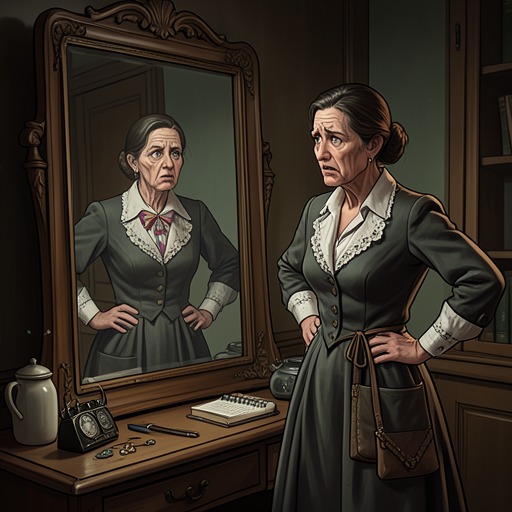
The models wait under umbrellas, smoking and huddling in silk kimonos. One, whose ankle appears to Rachel to be shapely and undamaged, insists on a footstool as well as a deck chair. Yet she walks without apparent difficulty when the models are asked to take their places in the water. Rachel reads their display of their bodies as confident and deliberate, and the sight sharpens her awareness of her own age and appearance. She keeps her own comparable exposure to the hotel swimming pool, hides her unruly hair beneath a broad-brimmed straw hat, and uses the hat both as an attempt at style and as cover. The weather therefore compromises the shoot’s images while also intensifying Rachel’s self-consciousness about the bodies gathered for them.
Production Pressure and Fraying Morale
After witnessing the difficulties for a couple of days, Frank Alder leaves the shoot. He puts an overwrought product manager in charge, but the young man’s attention to relatively minor concerns does not meet the crew’s immediate, changing problems. Rachel avoids him where she can; when conversation is unavoidable, she agrees with him and then disregards what he has said. Instead, she sends Frank a brief, honest progress report by fax each day. Her detached manner is a last defense against panic, but the reports keep the absent decision-maker informed while the on-site chain of command feels increasingly unhelpful.
The financial stakes leave little room for a mistake. Mallarmé Skincare Products plc has invested £500,000 in the two-week shoot, while a £5 million media budget has largely already been committed to airtime over the coming year. The rain is therefore not just an inconvenience to the crew: it threatens work carrying a substantial cost and obligations beyond the island. As the days pass, Rachel longs for the steadier pragmatism of the original director, Steve Betts. His replacement, a much younger man with a tight blond perm and a twitching mouth, continues the outward motions of directing, but his dazed expression and flailing hands suggest to Rachel that he is terrified.
Each morning, the most senior members of the production gather to review the rushes and decide what can be used. Dark clouds are a problem even when rain has stopped: they impair the light and atmosphere, then linger and delay the return of usable conditions. The growing discussion of what might be salvaged in the cutting room brings the group a sense of fellowship under pressure, but it also marks how much the shoot is relying on later repair. Alcohol consumption reaches record levels; drug use is suspected, though the evidence for it is less clear. In the second week, tensions also surface through sexual liaisons: a recently married lighting-crew member sleeps with a waitress admired by unmarried colleagues, while rumours circulate about the models’ relationships with members of the entourage and their shifting affections. These distractions do not resolve the production’s practical problems; they add rivalry to an already strained camp.
Rachel’s Adjustments and the Notebook Record
Near the end of the second week, Rachel records that only two days remain and notes a morning with four uninterrupted hours of sunshine, followed by an afternoon squall as bad as ever. The short clear spell does not mean the weather has turned; it instead offers a limited opening inside a pattern that continues to thwart the work. Rachel responds by proposing a change to the commercial: reduce its length from forty seconds to thirty and increase the product shots from two to four. Frank agrees, while the creative team threatens to mutiny. Rachel understands that the consequences of the decision will fall more heavily on her than on them, and that disparity informs her willingness to press ahead.
The entry presents her work as a sequence of decisions made under conditions she cannot control. She cannot stop the rain, guarantee the light, or restore the original directing arrangement, but she can revise the film’s structure and keep communicating with Frank. The notebook preserves both the measurable details of the crisis—the remaining two days, four hours of sun, the squall, and the changed shot count—and Rachel’s sense that she will bear the cost of the choice. On a separate line she records that Nathan has still not replied. The personal disappointment remains unresolved alongside the production emergency, without the diary explaining why he has not answered or connecting his silence causally to the shoot.
Significance Within the Shoot
The disruption develops through repetition rather than a single catastrophic incident: rain returns, the beach is repaired, the crew waits, and the available footage is reassessed. That rhythm makes the location itself a constraint on commercial production. Even when the rain stops, the clouds can continue to compromise the image, and even when sunshine appears, the set may first need repair. The crew’s labour and Rachel’s decisions are consequently shaped by intervals that are brief, uncertain, and never fully equivalent to normal working conditions.
For Rachel, the episode brings together professional responsibility and personal vulnerability without allowing either to displace the other. She manages reports, avoids a manager she considers ineffective, confronts an enormous budget, and accepts a creative compromise that provokes her colleagues; at the same time, she measures herself against the models and notes Nathan’s silence. The evidence ends with the shoot still under pressure, not with a definitive account of whether the revised commercial succeeds. Its significance lies in the contrast between the demand for a controlled, polished advertisement and a production whose weather, working relationships, and final decisions remain only partly controllable.